
AI didn't take my job. It changed the shape of it overnight. A 160-year-old economic paradox is the reason the next chapter for human work is probably expansion, not extinction.
The threat of the hyperspace bypass
In January, all seemed well. I was a senior engineer at a busy software development studio, coding hard in the day, and in the evenings following my family routines, such as reading to my 12-year-old son. In January we started to read Douglas Adams' classic comedic SF novel The Hitch-Hiker's Guide to the Galaxy.
I did not expect that before we'd finished that book, my job would be utterly transformed.
Not by a layoff or an AI-driven restructure. The job I had simply ceased to be useful in its old form. Last year, most of my professional life was spent writing and debugging code. This year, AI coding models crossed a tipping point. The low-level construction work is gone (mostly), and the other parts of my job have expanded to fill the space.
As my son and I continue to work through Hitch-Hiker's Guide, some pithy phrases and ideas from that book now resonate in new ways.
Like the protagonist Arthur Dent, who awakes to find his home about to be bulldozed in the name of efficiency, I find myself questioning the very safety of my career.
But I am optimistic. And I do have good reasons to be hopeful. There is a key system-level dynamic that is often not considered in the AI doom talk.
The strange thing about AI is that although it dramatically reduces the effort required to produce work, my experience is that it has created more opportunities rather than fewer. This may be an example of “Jevons Paradox”.
Jevons and his paradox
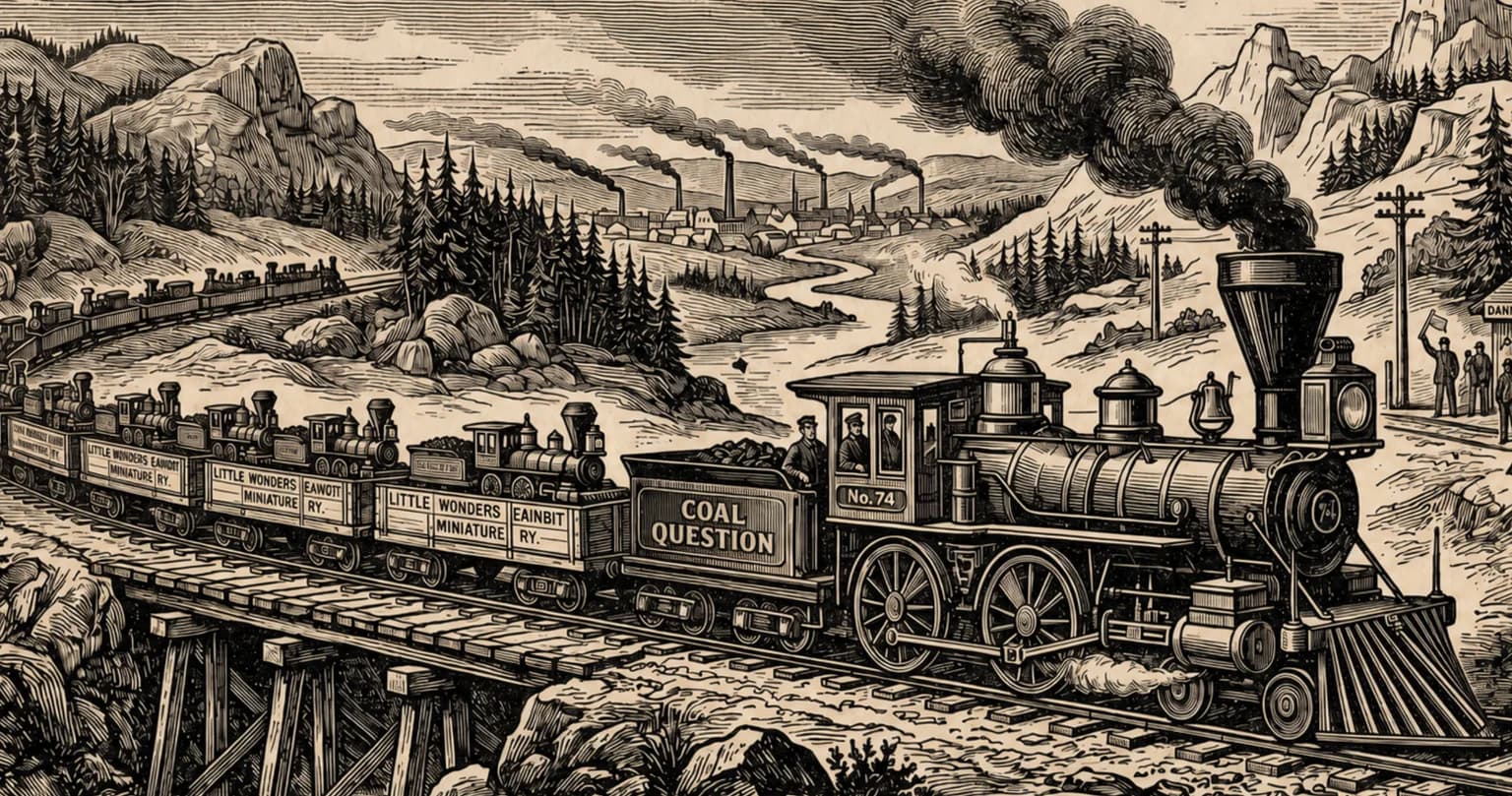
The fear is that because AI can do the work faster, there will eventually be no work left for humans. To understand why I think this is probably wrong, let me take us back to 1865 and a man named William Stanley Jevons.
Jevons noticed a paradox: as steam engines became more coal-efficient, the consumption of coal didn't go down — it soared. As the cost of using coal-powered energy dropped, it became viable for a thousand new uses. Efficiency didn't slow down the railways; it led to a massive acceleration and expansion of the system as a whole. This effect became known as “Jevons' Paradox”.

Economists now understand the dynamic as a consequence of “the rebound effect”. The dynamic in play is that for certain types of things (such as electricity), when the price goes down, the demand for it goes up — and the increased usage actually creates growth that leads to even more demand.
Could this be happening now, with AI? Not because AI itself is becoming more efficient (although it is), but because work in general is becoming more efficient. If almost every job becomes cheaper to execute, then will the resulting economic development create even more work?
From my worm's-eye perspective, it sure feels like that. Let me give an example, with a preamble:
What happens when you stop panicking
The Guide advises “stay calm long enough to distinguish between what is merely demanding attention and what actually matters”.
And indeed there is a time management technique called the “Urgent/Important Matrix” where you categorise tasks based on urgency vs importance. Things that are urgent and important need to be done immediately. Important things that aren't so urgent… tend to rust in the back yard.
As the effort required to produce a technical asset drops toward zero, I'm not working less. But I am working on a different mix of tasks. Increasingly I find that I'm able to work on those not-urgent-but-important jobs. And those are often the ones that can set up the conditions for future growth.
For example, we've just built and launched a whole new company website for Labrys. Last year, that project might have taken a project team months to complete. Thus, it was always deferred when there was significant billable work to panic about. This year, it became possible to deliver a full-featured new website in only a few weeks with a tiny team of one to two people.
And much of the work could be done via background agentic processes. AI agents drew up the migration plan, imported and processed our old Notion documents, researched and cleaned up the images, and performed SEO analyses. The humans set the direction and made the calls that actually needed judgement; the agents did the digging, hauling and sorting.
That meant that it became possible to take on this task while also being able to deliver the urgent revenue-earning projects. Now we have a new website, which (hopefully) will bring new collaborative opportunities.
And that will create more work. Not less.
Of course, time will tell how much of the expansion of work will translate into work for humans, but I did say I was optimistic. Stay with me.
The Shoe Event Horizon
I can't help myself. I like to zoom out and imagine whole systems. Imagine that this kind of change is happening in innumerable other organisations. Zooming out to the whole planet, what does that look like for our civilisation? If Jevons' paradox is going to push a global expansion in human activity, what will we actually do?
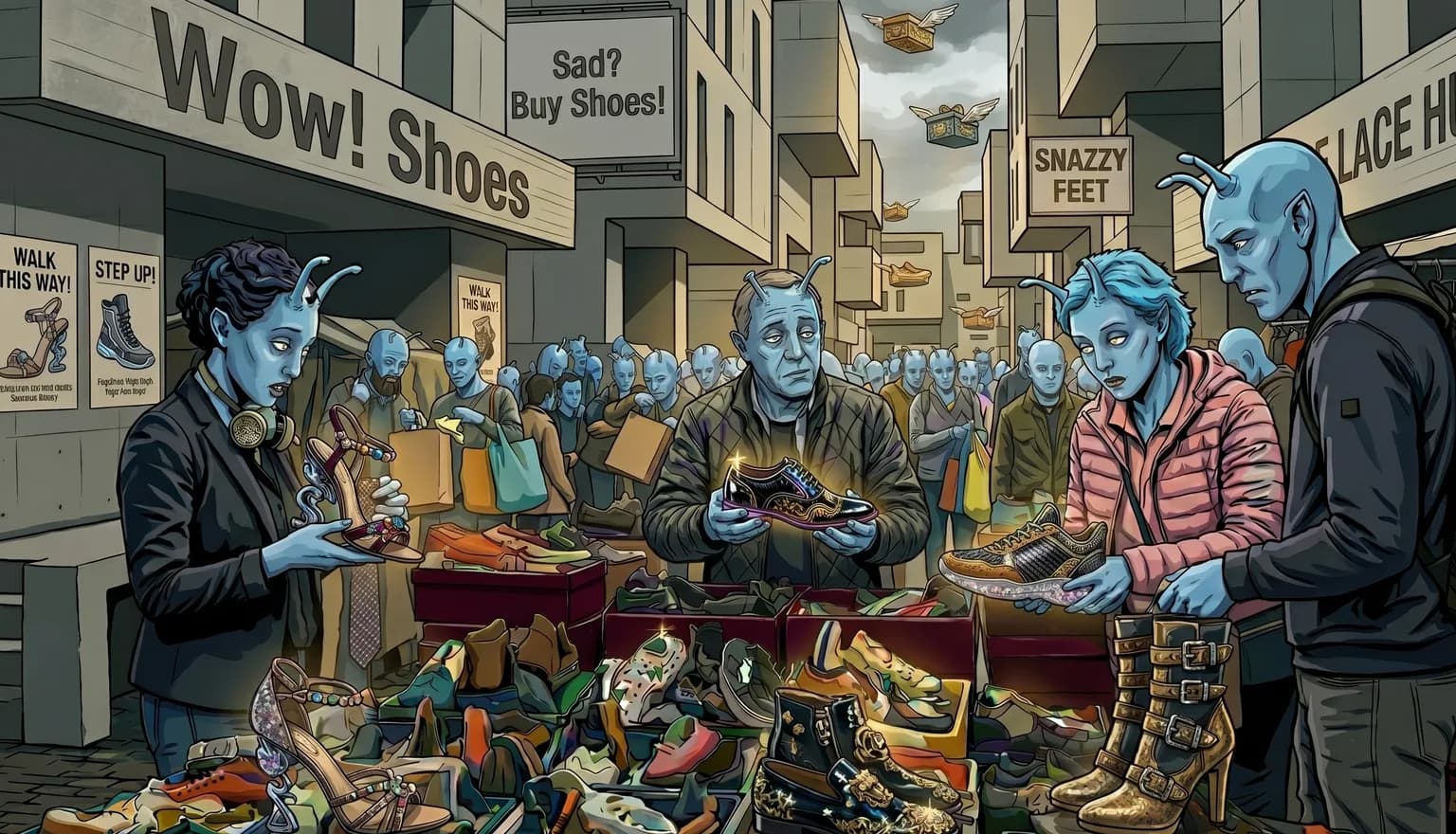
In The Hitchhiker's Guide, Adams describes a civilisation whose ambitions were unimaginative. As their economy developed, their increasing boredom made them turn to retail therapy. At a certain point, a runaway effect caused them to reach a “shoe event horizon” where shoe shops were the only possible economic activity and their civilisation collapsed.
Globally, the economy has long been locked into the pursuit of short-term profits, which is taking its toll as we neglect other crucial issues. In a world where it's difficult to perform non-profit-related activities at any scale, we have been approaching our own kind of shoe event horizon.
Perhaps, as AI grants us the opportunity to stop “panicking” and focus on matters that don't relate to immediate short-term gain, we'll start to properly address things that are important for other reasons. I'm not even going to mention climate change. Oh, OK then. Climate change.
But let's not pretend that's the only carriage in the slow-motion train wreck we face if we ignore the global important-but-not-urgent issues indefinitely.
What could we do? Where could we go? Because now we have a magical new…
Infinite Improbability Drive
The Hitchhiker's Guide describes a starship fitted with an “Infinite Improbability Drive” that allows a ship to go anywhere and actualise anything, no matter how improbable, difficult or distant. Working with modern AI feels remarkably similar. If you can imagine it, you can probably go there… almost instantly. (Although you may need to put up with the occasional unexpected bowl of petunias).
Now is our chance to go somewhere interesting; beneficial, but perhaps not immediately profitable. I'm not going to bore you with a long list of techno-optimist dance numbers.
So… here's a short list of techno-optimist dance numbers. I did say I was optimistic.
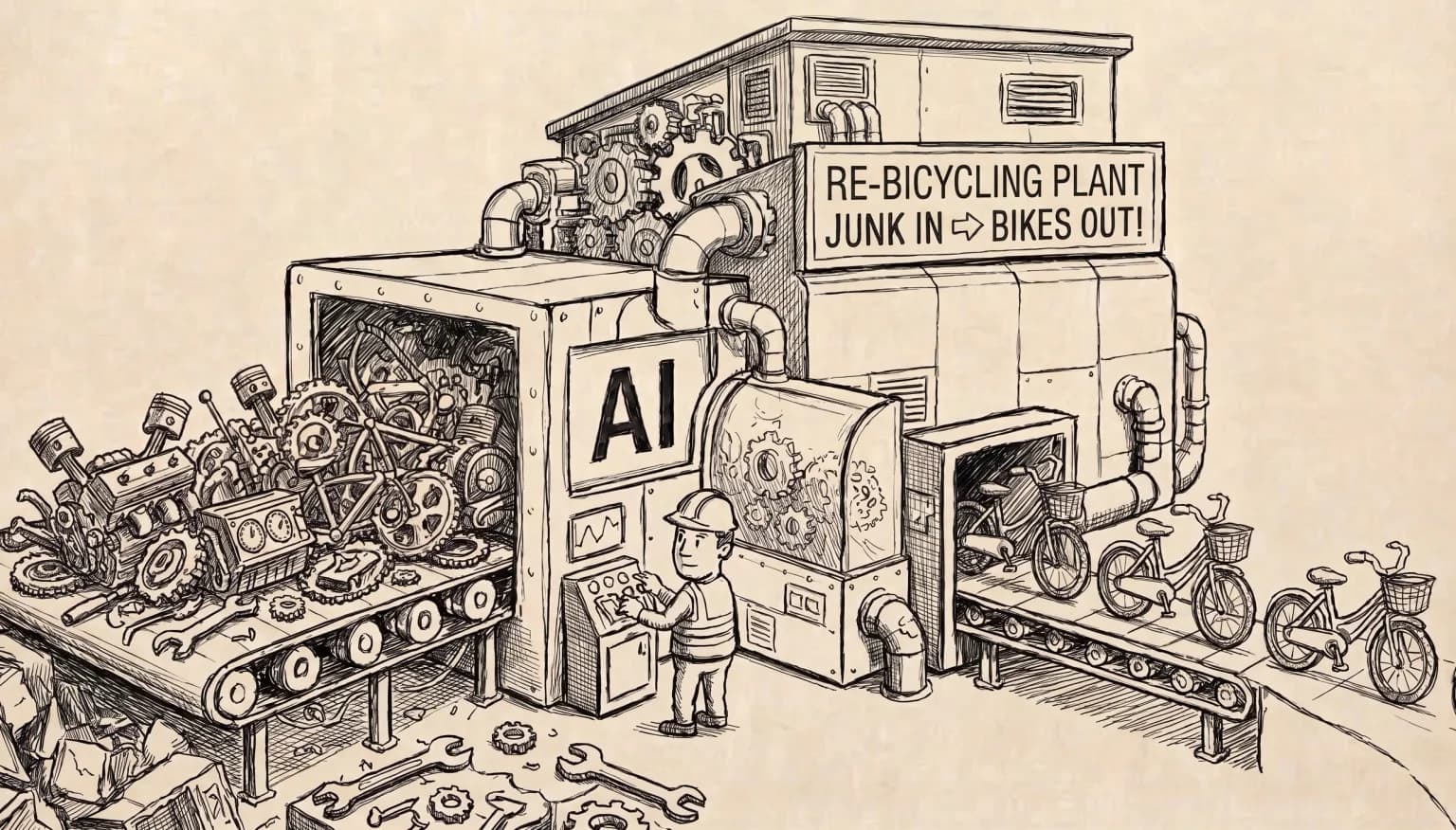
What if recycling plants didn't just sort plastic from glass, but automatically assembled waste into DIY constructor-kits for useful products? We don't do this with humans right now because it would take a lot of meticulous brain power… and because it's quicker and more profitable to just make and sell new stuff.
What if we could deploy adaptive AI-managed permaculture food gardens to massively scale up sustainable agriculture? Companion planting and food forests take a lot of attention and thought. Attention and thought can now be automated.
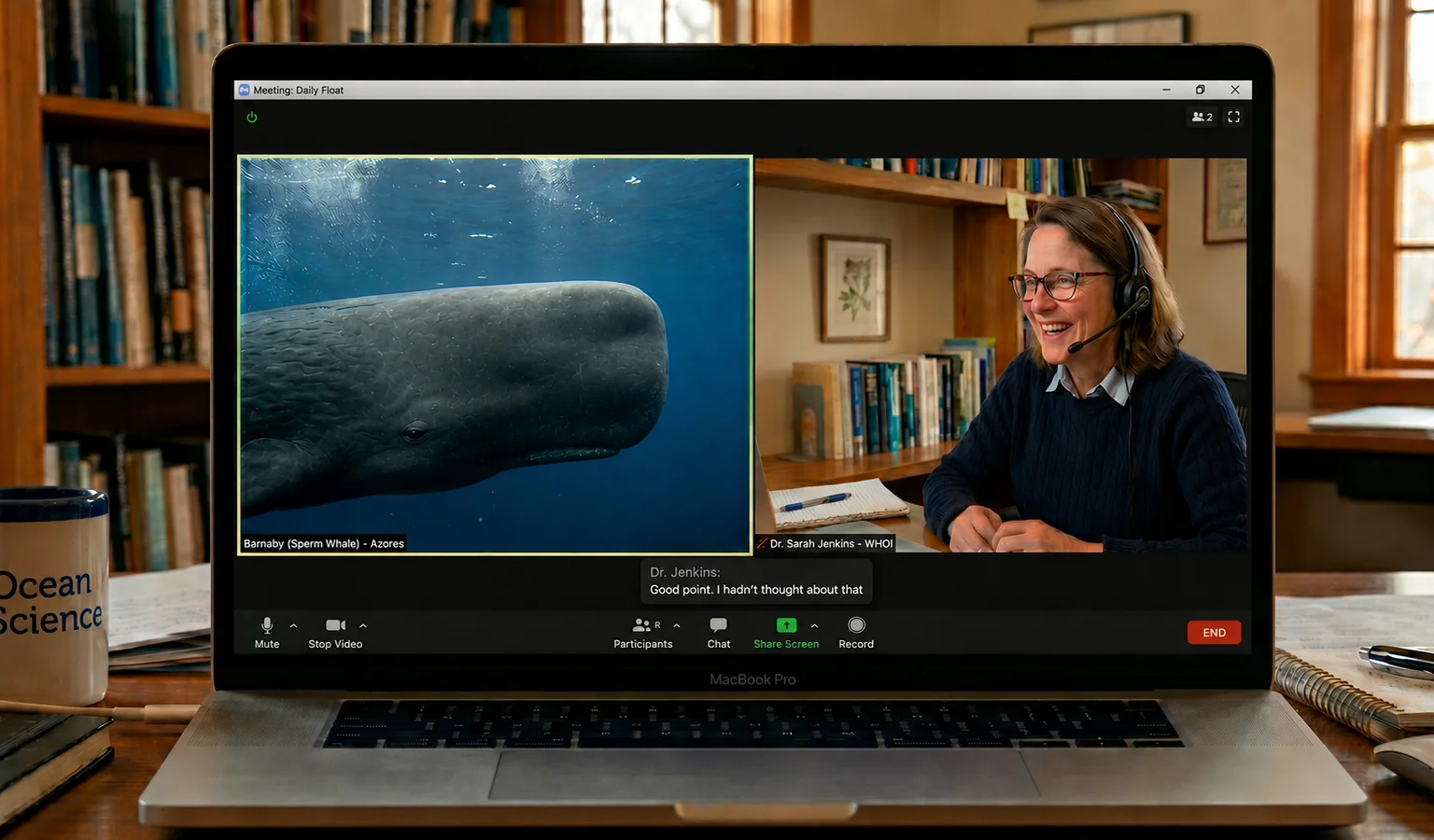
And one more pretty dazzling destination, with a special nod to The Guide, which does feature a sperm whale: what if we could literally ask whales to help us understand and explore the oceans? (Tip: look up sperm whale language research)
Where else could we go?
The Meaning of Life, the Universe and Everything
My son and I have been talking about that one. If the only metric we cared about was short-term economic output, perhaps the ultimate answer to life, the universe, and everything really would just be a number (though in today's market, it would probably be bigger than 42).
In The Guide, Earth itself is revealed to be a giant, organic supercomputer, built for the sole purpose of pondering the Ultimate Question.
Maybe there is a strange, beautiful parallel happening in my home. As my professional life transitions away from the “panicky,” low-level construction of code and toward higher-level review and strategy, the extra breathing room has bled into my home life. We've started wrapping up our evening “story time” routine a bit earlier. Not to rush to the next task, but to leave open space for a 12-year-old and his dad to muse on the actual mysteries of existence.
If Jevons' Paradox holds true for the AI era, we aren't headed toward an automated vacation. We are going to be busier than ever. But my hope is that this seismic shift moves us away from urgent, hyper-optimised panic and toward billions of these unhurried moments devoted to the things that actually matter.
We might not turn the entire planet into a giant pondering supercomputer. But if we leverage this newfound efficiency correctly, we might finally move our civilisation onto a path worth traveling.
So don't panic. The answer might not be 42, but it's beginning to feel like we might actually have time to figure out the question.